
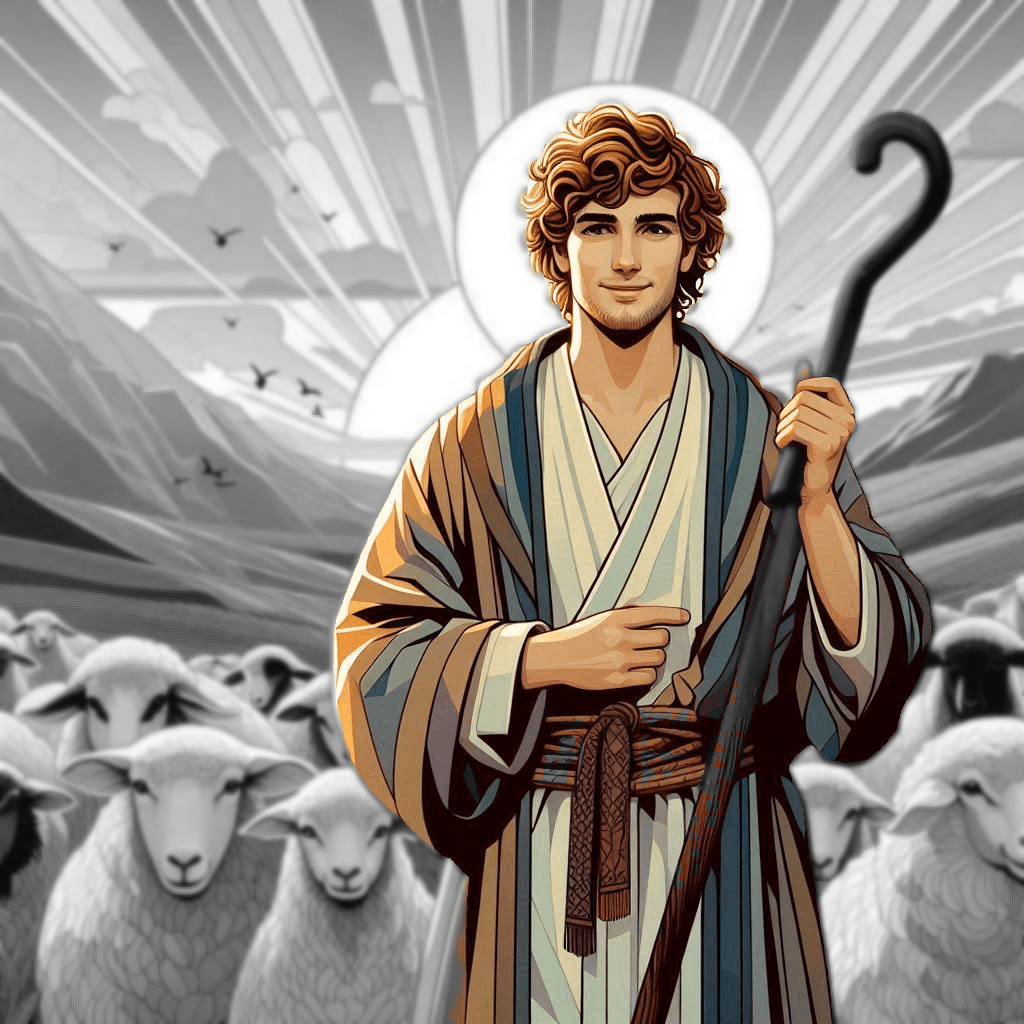

“Now the God of peace, who brought up from the dead the great Shepherd of the sheep through the blood of the eternal covenant, even Jesus our Lord.” (Hebrews 13:20, NASB 95)
Growing up, my family had five acres of land on the outskirts of a small, rural town. Because of this, we had a variety of animals. A couple chickens, a few geese, three goats and two donkeys at one time or another dotted the landscape of our little farm.
We even dabbled in sheep for an ever-so-brief time. That was a mistake. We didn’t realize what we were in for.
We didn’t find the sheep. The sheep found us. They came walking up our driveway one day as if that were a normal thing to do. We had no clue where they came from. We really didn’t know where they thought they were going since our entire property was fenced. They were truly clueless.
We put up posters. We asked around town. We searched high. We searched low but to no avail. No one wanted to claim these sheep.
So we decided to keep them. We put them out in our pasture with the rest of the animals we owned at that time. We figured that would be okay.
It wasn’t.
They were so intimidated that they would run to one particular corner every day and just stand there. Never moving. Never flinching. Just staring at the peeler core.
We noticed this right away and chased them from the corner out into the pasture. An hour later they were in the exact same place staring at the same peeler core. Never moving. Never flinching.
I don’t know what it was about that particular fence post, but they saw something fascinating about it. They would stand there day after day. Day after day we chased them away. It was tedious, to say the least.
After a while, the sheep grew fat with wool. Unprepared to actually take care of sheep we counted our cost. We figured it was better to give them to someone who knew what they were doing rather than try to figure them out.
The sheep learning curve was too great for us. We gave them to a friend and went on with our life, merry and sheepless.
That’s how sheep are. They take a lot of work. That’s why they need a shepherd who can lead them.
God Calls His People Sheep
Now, don’t be offended, but God calls us sheep. We too often miss the point and act spiritually clueless much like sheep. Because of this, we must have a shepherd.
Our text tells us who the “great Shepherd” is. It’s Jesus. This means Jesus is the “head Pastor” over the church. The word “pastor” means “shepherd.” So Jesus is the “Pastor” over the church.
Now, you may be thinking that this means the church doesn’t need earthly pastors since we have the best Pastor there is, Jesus Christ. This isn’t the case at all.
In the book of 1 Peter, we find some interesting counsel from the apostle Peter. His words are interesting:
“For you were continually straying like sheep, but now you have returned to the Shepherd and Guardian of your souls.” (1 Peter 2:25, NASB 95)
First, Peter says we are sheep. Not very flattering. Then he explains that we are part of the flock of God. He is our Shepherd. We are His sheep.
What Peter says next is what we’re interested in. In chapter 5, he says this:
“shepherd the flock of God among you, exercising oversight not under compulsion, but voluntarily, according to the will of God; and not for sordid gain, but with eagerness.” (1 Peter 5:2, NASB 95)
A couple verses later, he finishes the thought:
“And when the Chief Shepherd appears, you will receive the unfading crown of glory.” (1 Peter 5:4, NASB 95)
Did you catch that? The Chief Shepherd has employed “under-shepherds.” They do the work of the Chief Shepherd, with all the authority He has. They are the guardians of the flock, those with authority to lead it.
The point is that we need shepherds as people of God. We are sheep. Sheep need shepherds. For everyone, that is Jesus Christ. However, Christ isn’t here, so He has given us under-shepherds to do that work.
That means there is a leadership model in the church. We call them “shepherds.” Remember, that’s what “pastor” literally means. The shepherd feeds and waters the flock while also keeping them out of trouble.
This is the work of the pastor. He has been endowed with heavenly authority to feed and guard the flock of God.
The Sheep of Christ Need a Worthy Shepherd
However, this doesn’t mean the Shepherd has unchecked power. He is limited by something very important: his own character. Peter also says this:
“nor yet as lording it over those allotted to your charge, but proving to be examples to the flock.” (1 Peter 5:3, NASB 95)
The pastor isn’t an absolute despot regardless of his authority. He is to humbly execute the office of shepherd. He follows the example of the “Chief Shepherd” and passes that knowledge on to the flock. He must set a Christ-like standard for the flock to follow. In other words, he leads by example.
This kind of leader is a worthy shepherd. This is the kind of pastor every church should want. A humble servant-leader.
But don’t miss the impact. He still leads. That means others follow.
The Sheep Must Follow the Lead of the Shepherd
Now, let’s get back to Hebrews. The point of all this is that the flock of God must follow the main Shepherd, Jesus Christ. To do so, they are obliged to follow the example of their earthly pastor. They follow his lead. Wherever he goes, they go because that’s where the “great Shepherd” would go.
The writer of Hebrews echoes Peter’s understanding of the authority of the undershepherd. A few verses back, he writes this:
“Obey your leaders and submit to them, for they keep watch over your souls as those who will give an account. Let them do this with joy and not with grief, for this would be unprofitable for you.” (Hebrews 13:17, NASB 95)
Did you catch that? This is instruction to believers in the church, not the pastor. What does the author of Hebrews say to that flock? “Obey your leaders.”
It’s not the job of the pastor to force the sheep to follow him. It is the obligation of the flock to follow the pastor. If they don’t, they have disobeyed the “Chief Shepherd” and have grieved their earthly shepherd. That doesn’t benefit the flock. It doesn’t benefit anyone.
So What?
Too many believers see the pastor as a figurehead or a CEO. They don’t see Him as a servant of God, endowed with authority as an undershepherd from the Chief Shepherd.
In fact, the Chief Shepherd went so far as to give His life for the sheep. He sacrificed Himself so that others could live. The pastor may not give up his life in that same way, but that doesn’t mean he doesn’t give up a lot to be the shepherd. That kind of selfless attitude is a must in ministry.
If the church is to survive, it must view the pastor biblically. If God’s flock sees their shepherd this way, God will bless them.
May we as the flock honor God’s servant-leaders in an obedient and respectful way.
 Journeys of a Former Firebrand
Leave a comment